
“The Magicians” and D&D
Lev Grossman’s recent fantasy novels – The Magicians and The Magician King – have often been compared to the Harry Potter series. It’s obvious that Grossman pays homage to these books, as well as to C. S. Lewis’s Narnia. But he has also admitted a deep involvement in D&D and there are many familiar elements from the game that show up in his work as well.
20 Questions…
1 – What is the deal with my cleric’s religion?
If you’re just starting out, you may be on a spiritual journey and addressing an – as yet – unknown deity. Otherwise, it’s likely that your god and its cult is rooted to a location on the map. Very few deities are at the point where they can extend their range beyond these limited and defined geographical territories.
Clerics Vs. Magic Users
One of the hardest things people coming to the OSR, or old school, pre-1980 role playing games face is the issue of the “cleric.” These religious figures – who could utilize full armor, some weapons, and their own lists of spells and magic as “spiritual warriors”, confuse and annoy many gamers. The “cleric”, as a player class, bothered people even at D&D’s own start. The game’s unfairly neglected co-creator, David Arneson, did not use them at all in his earliest version.
I, however, feel that clerics have been unfairly maligned and that they can be, and indeed are, essential to OD&D and “old school gaming” in general.
The Mythic & The New

When I was a kid, I was so wrapped up in Tolkien that I came to judge any other fantasy writer by the bar I felt he had set. This, believe it or not, was hardly an unusual perspective in the 1970s. Prior to Star Wars, Tolkien and Star Trek were really all most of us had.
OSR Quiz
1. If you had to pick a single invention in a game you were most proud of what would it be?
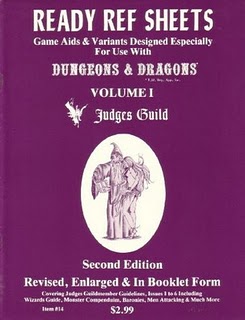
I think my general ability to fuse the Outdoor Survival map with some of the material from the Judges Guild’s Ready Ref Sheets, while not an “invention” per se, is nonetheless something I am proud of. In the words of Tim Gunn, I “made it work.”
2. When was the last time you Gmed?
On MLK day – last Monday.
Into The Woods
“Life is nothing but a competition to be the criminal rather than the victim.”
– Bertrand Russell
After spending about 90 minutes DMing an expedition yesterday – using the original Avalon Hill Outdoor Survival map, Swords & Wizardry: White Box, OD&D, and the Judges Guild Ready Ref Sheets – I saw again just how dangerous the wilderness can be. As the player character and NPCs moved through the woods at the clip provided, I dutifully rolled for random encounters. And, just as dutifully, they were assaulted by rats and centipedes, managed to skirt a tribe of hobgoblins and a sad collection of lost (and miserable) berserkers, just to go a relatively short distance towards their objective. It was, of course, some bad luck, but also instructive.
Into The Wilderness
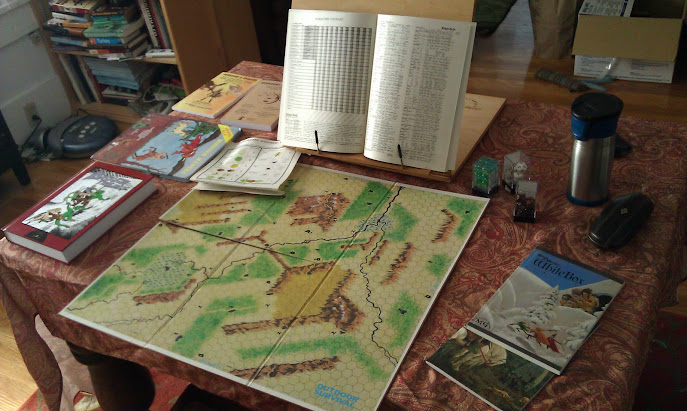
My old friend William was up in the Bay Area – visiting relatives over the holidays – and we got together to play some D&D.
D&D and Transgression
“Strange is the night where black stars rise,
And strange moons circle through the skies,
But stranger still is
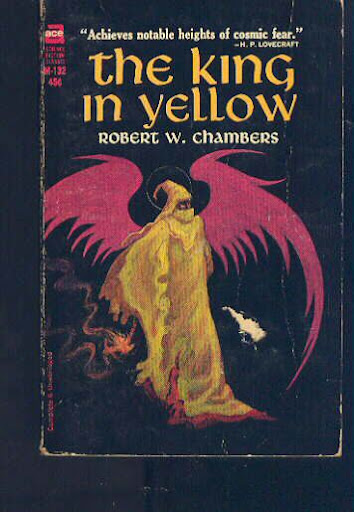
Lost Carcosa.”
While many people have forgotten it now, Dungeons & Dragons once stirred up its own brand of parental anxiety and attendant media controversy. Back in the early 1980s, when the game first broke out of its rather small original niche and into the wider culture, many people found cause to worry about it. Christians believed that it encouraged occultism. Some parents, watching their kids spending hours and hours playing it and being preoccupied/consumed with it (I remember experiencing this kind of original fugue state the game could inspire), became concerned that the game could cause psychological damage to their children.
In The City…
Although lamps burn along the silent streets,
Even when moonlight silvers empty squares
The dark holds countless lanes and close retreats;
But when the night its sphereless mantle wears
The open spaces yawn with gloom abysmal,
The sombre mansions loom immense and dismal,
The lanes are black as subterranean lairs.
And soon the eye a strange new vision learns:
The night remains for it as dark and dense,
Yet clearly in this darkness it discerns
As in the daylight with its natural sense;
Perceives a shade in shadow not obscurely,
Pursues a stir of black in blackness surely,
Sees spectres also in the gloom intense.
The ear, too, with the silence vast and deep
Becomes familiar though unreconciled;
Hears breathings as of hidden life asleep,
And muffled throbs as of pent passions wild,
Far murmurs, speech of pity or derision;
but all more dubious than the things of vision,
So that it knows not when it is beguiled.
No time abates the first despair and awe,
But wonder ceases soon; the weirdest thing
Is felt least strange beneath the lawless law
Where Death-in-Life is the eternal king;
Crushed impotent beneath this reign of terror,
Dazed with mysteries of woe and error,
The soul is too outworn for wondering.
– J. “B.V.” T
Wraith Overlord
“Beneath the city, there is yet another city: wet and dark and strange; a city of sewers and moist scuttling creatures and running rivers so desperate to be free not even Styx fits them. And in that lost city beneath the city, I found the child.”
– Harlan Ellison
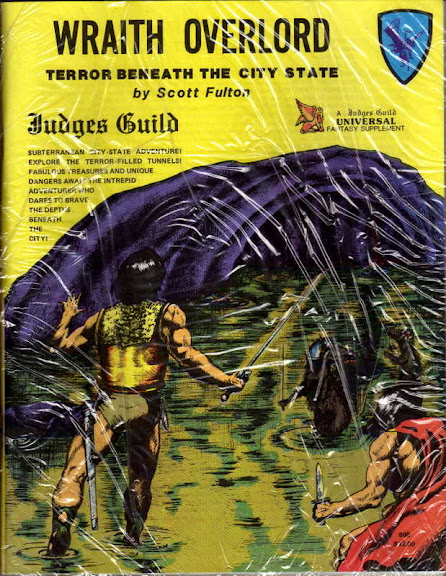
The Judges Guild’s “Wraith Overlord” module was an attempt to create a mega-dungeon, or series of linked underground adventures, under the famous City State of the Invincible Overlord. This publication was issued late in the company’s history and, while currently fetching high prices online, nevertheless has a rather mixed reputation. After all, people assume that the dungeon to the City State should be at least as detailed and interesting as the city above it. That is a high bar to get over indeed.

What I’m Playing…

What I’m Using…

What I’m Reading…

What I’m Studying…
What Inspires Me
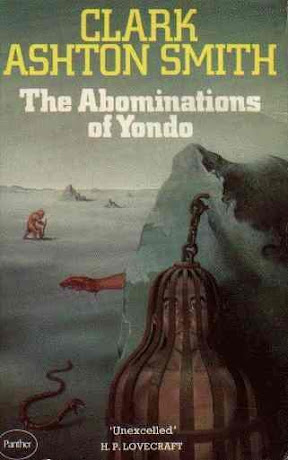
What Inspires Me
 inthecitiesdotcom